
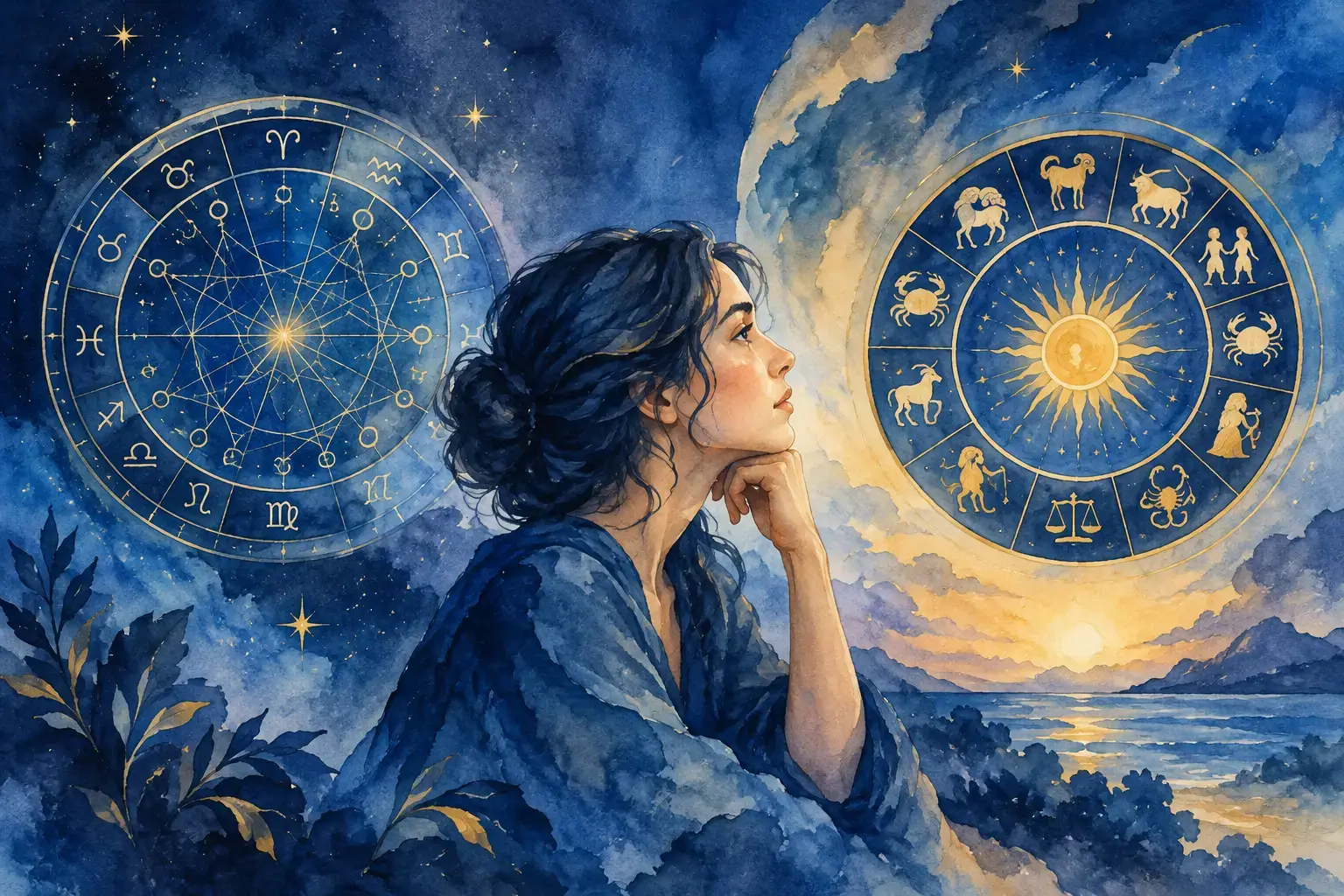
You read a horoscope that says communication may feel tender this week, and it lands a little too close to home. Then you look at your birth chart and see an intricate wheel of planets, houses and symbols. The natal chart versus horoscope question often begins right there: are these two different systems, or two ways of reading the same sky?
They are connected, but they serve different purposes. A horoscope offers a timely perspective on the energy moving around you now. A natal chart is a personal astrological map, calculated from the date, time and place of your birth. One can be a helpful prompt for reflection today; the other offers a deeper lens for understanding your enduring patterns, strengths and growth edges.
Neither needs to dictate your choices. Used thoughtfully, astrology can create space to pause, trust your own observations and move forward with greater self-awareness.
Natal Chart Versus Horoscope: The Essential Difference
Your natal chart, also called a birth chart, is a snapshot of the sky at the moment you were born. It maps the positions of the Sun, Moon and planets through the signs and houses of the zodiac. Because it relies on your exact birth details, it is uniquely yours.
A horoscope is an interpretation of current or upcoming planetary movements. Daily, weekly and monthly horoscopes commonly use your Sun sign, such as Leo or Capricorn, as a starting point. More personalised horoscopes may also consider your rising sign, Moon sign and current planetary transits through your individual chart.
Think of your natal chart as the landscape of your inner world. It describes the terrain: the places you may feel naturally confident, the patterns you return to in relationships, the way you process emotion and the values that guide your decisions. A horoscope is more like the weather forecast. It speaks to the conditions that may be passing through that landscape at a particular time.
The weather can influence your plans, but it does not change the landscape. In the same way, a challenging horoscope does not mean something is destined to go wrong. It may simply invite you to slow down, communicate clearly or give a decision more time.
What Your Natal Chart Can Tell You
A natal chart is not just a more detailed version of your star sign. Your Sun sign is one meaningful piece, but it cannot tell the whole story. Two people born under the same Sun sign can approach love, work, family and change in very different ways.
Your Moon sign is often associated with emotional needs, instinctive reactions and what helps you feel safe. Your rising sign, or ascendant, relates to your outward style, first impressions and the way you meet the world. Mercury can offer insight into communication, Venus into affection and values, and Mars into motivation, desire and how you take action.
The houses add another layer by showing where these themes may play out. For example, a strong emphasis on the seventh house may bring relationships and partnership into focus, while activity in the tenth house may draw attention to career, contribution or public direction.
Aspects, which are the angles planets form with one another, are where a chart becomes especially nuanced. They can describe ease between certain parts of your nature, as well as tensions that call for patience and conscious choice. A natal chart reading is most useful when it helps you recognise a pattern without reducing you to it. You are never only your chart.
Why your birth time matters
Your birth time is particularly important because it helps calculate the rising sign and house placements. Even a difference of an hour can alter parts of the chart, especially when a birth occurred close to a sign change on the horizon.
If you do not know your exact time, you can still explore planetary sign placements and broad themes. It is simply wise to hold any house-based interpretation more lightly. A good reading makes room for what is known, what is uncertain and what resonates with your lived experience.
What a Horoscope Is Designed to Do
A horoscope brings astrology into the present moment. It interprets transits - the ongoing movements of planets - and considers how their symbolism may colour a day, week or month.
For instance, a Mercury retrograde period may encourage people to review messages, travel plans or unfinished conversations. A Venus transit may place love, pleasure, money or self-worth under the spotlight. These are not universal guarantees. They are themes that may help you notice where extra care, openness or reflection could be valuable.
Most popular horoscopes are written for Sun signs because they are accessible. If you only know your birthday, you can still receive a useful prompt. The trade-off is that a Sun-sign horoscope speaks to a large group of people, so it will not always feel precise.
Reading for your rising sign can often make a horoscope feel more personally relevant, as houses are traditionally calculated from the ascendant. Reading both your Sun and rising sign can offer a broader picture, provided you treat the guidance as an invitation rather than a fixed prediction.
When to Use a Natal Chart and When to Read a Horoscope
A natal chart is especially helpful when you are asking enduring questions. You may be wondering why similar relationship dynamics keep appearing, what kind of work feels meaningful, how you handle conflict, or what supports your emotional wellbeing. It can offer language for experiences that have felt hard to name.
A horoscope may be more useful when you want a short check-in. Perhaps you are preparing for an important conversation, feeling unsettled during a period of change or looking for a mindful theme for the week ahead. It can encourage you to ask, “What needs my attention right now?”
There is no rule that says you must choose one over the other. Your birth chart provides context, while horoscopes bring timing into the picture. Together, they can make astrology feel both personal and practical.
That said, context matters. If you are facing a major financial, legal, medical or mental health concern, seek qualified professional support alongside any spiritual guidance. Astrology can support reflection and emotional clarity, but it should not replace expert care or your own informed judgement.
How to Read Both Without Giving Away Your Power
The most empowering approach is curious, grounded and honest. Notice what feels relevant, but avoid forcing every event to fit an interpretation. If a horoscope says romance is highlighted, that might mean a heartfelt conversation with a partner, a clearer understanding of what you want, or simply giving yourself more care. Symbolism can show up in more than one way.
It also helps to keep a small record of what you notice. You might write down a transit or horoscope theme, then reflect a week later on what actually unfolded. Over time, you may see which forms of astrology support your self-understanding and which messages feel too broad to be useful.
Be mindful of content that creates fear or certainty around difficult events. Authentic spiritual guidance should leave room for your agency. A compassionate reader may help you explore possibilities, patterns and questions, but they should not pressure you or claim to know every outcome.
At Soul 2 Path®, personalised readings are about meeting you where you are. Whether you prefer a private online chat, a booked phone reading or speaking with an available reader, the aim is meaningful insight that supports your next step - not someone else taking control of it.
A More Personal Way to Work With Astrology
If you are new to astrology, start simple. Find your Sun, Moon and rising signs, then sit with how each one may describe a different part of your experience. Read a horoscope for your Sun sign and, if you know it, your rising sign. Notice what feels helpful rather than looking for absolute answers.
If you are already familiar with astrology, your natal chart can become a rich companion during life transitions. Current transits may highlight parts of your chart that are ready for review, release or renewed commitment. Yet the purpose is not to predict every twist in the road. It is to help you meet the road with more presence.
When clarity feels far away, let astrology be a quiet place to listen to yourself. The chart may offer the symbols, and a horoscope may offer the timing, but your values, choices and lived wisdom remain at the centre of the story.
