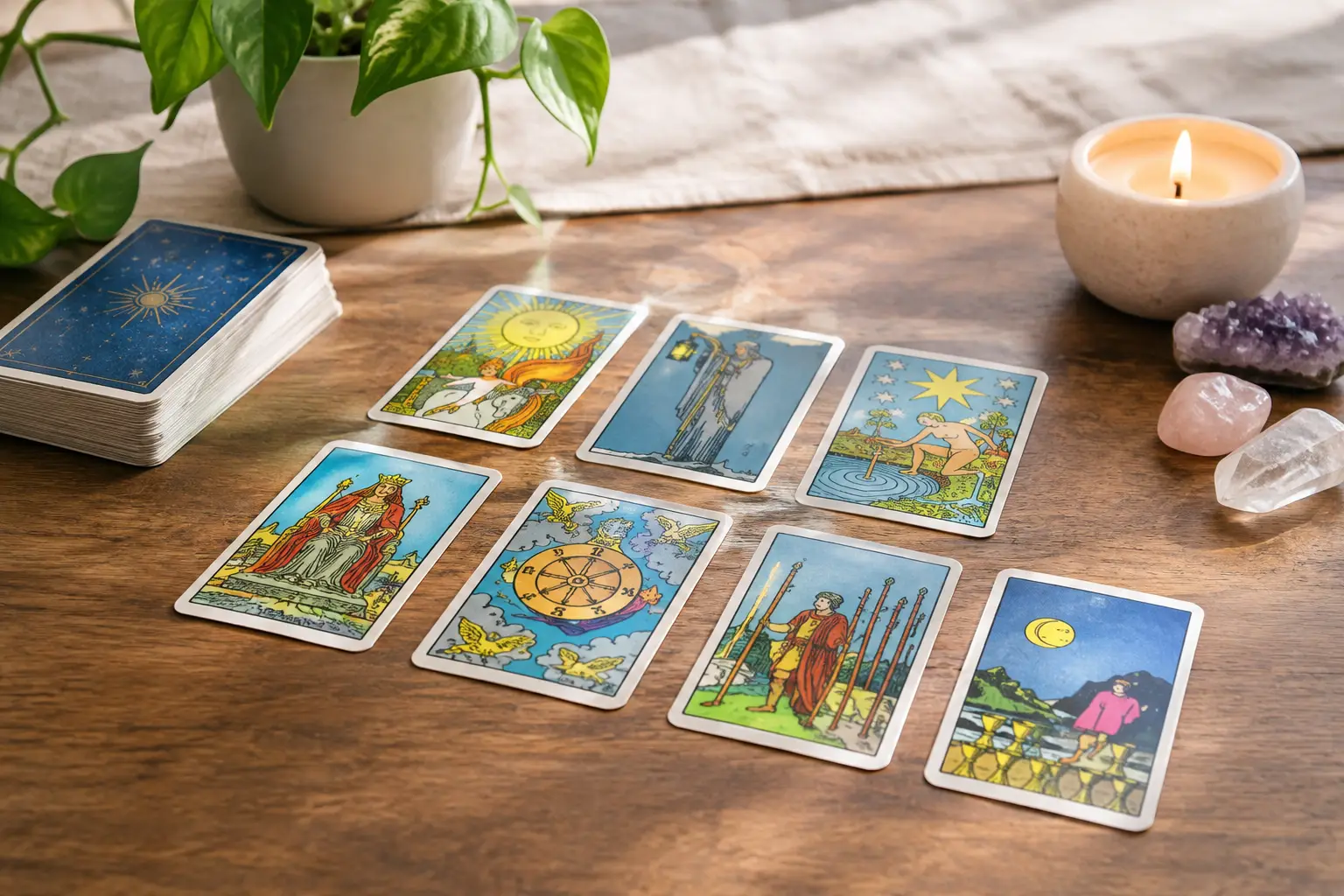
A tarot deck can feel wonderfully personal, then suddenly overwhelming when 78 cards and a big question sit in front of you. The best tarot spreads beginners can use are not the most elaborate ones. They give your intuition a clear place to land, helping you hear the message without getting lost in the layout.
A spread is simply a pattern that gives each card a role. Rather than asking a card to explain your entire future, you might ask what energy is present, what is challenging you, and what will help. That structure creates clarity, especially when you are reading for yourself during a tender or uncertain time.
Start with a question, not a prediction
Before pulling a card, take a quiet moment to settle. You do not need to meditate perfectly or say anything elaborate. Hold your question in mind and make it specific enough to guide the reading.
Instead of asking, “Will my relationship work?”, try, “What do I need to understand about this relationship right now?” Instead of, “Will I get the job?”, ask, “What can help me approach this opportunity with confidence?” Tarot is most useful when it reveals your current energy, choices and patterns. It can offer guidance, but it does not remove your agency.
If a question feels emotionally charged, write it down first. This can stop your hopes or fears from taking over the reading before the cards have had a chance to speak.
1. The one-card daily clarity spread
For a beginner, one card is not a lesser reading. It is a focused practice in noticing symbols, feelings and first impressions. Draw one card in the morning and ask, “What energy would serve me today?” Alternatively, pull it at night and ask, “What was today teaching me?”
Look at the image before reaching for a guidebook. What colour stands out? Is the figure moving or resting? Does the card feel encouraging, cautionary or reflective? Your immediate response matters because tarot is a conversation between the card’s traditional meaning and your lived experience.
A daily card builds trust slowly. Keep a note on your mobile or in a journal, then revisit it later in the day. You may find that a card which seemed unclear at breakfast makes complete sense after a difficult conversation or an unexpected opportunity.
2. The three-card past, present and possibility spread
This is one of the best tarot spreads for beginners because it is simple, familiar and surprisingly layered. Lay three cards from left to right. The first represents the past influence, the second shows what is active now, and the third reveals the likely direction or possibility if the present energy continues.
The word “possibility” matters. The third card is not a fixed promise. If you draw the Eight of Cups, for example, it may suggest a need to walk away from something unfulfilling. It does not mean you must make a dramatic decision that afternoon. Consider what emotional truth the card is bringing forward, then choose your next step with care.
This spread works well for general guidance, a friendship shift, work uncertainty or a situation that has been on your mind for weeks.
3. The situation, challenge and guidance spread
When you feel stuck, you do not always need more information. You need a clearer view of what is actually in the way. Draw three cards and assign them these positions: the situation, the challenge and the guidance.
The situation card grounds the reading in what is real. The challenge card may point to an external factor, such as timing or communication, but it can also reveal an inner block like fear, people-pleasing or impatience. The guidance card is your practical anchor. Ask yourself how you can embody its energy in a small, doable way.
Say you draw the Two of Swords as the challenge. Rather than treating it as bad news, see it as an invitation to stop postponing a decision. A guidance card like the Queen of Pentacles could then suggest choosing the option that supports your security, health and self-respect.
4. The relationship check-in spread
Relationship readings are often where tarot becomes most emotionally loaded. Whether you are wondering about a partner, a new connection, a family member or a friendship, use a layout that brings you back to your own centre.
Draw three cards: your energy in the connection, the connection’s current energy, and what supports a healthier path forward. This is more balanced than trying to read another person’s private thoughts or asking whether they are “the one”.
Be especially gentle with cards such as the Three of Swords, Devil or Tower. These cards can highlight pain, attachment, disruption or an overdue truth, but they are not a sentence on your relationship. Context is everything. The Three of Swords may reflect old heartbreak being triggered, while the Tower may show that an unhelpful pattern is ready to change.
A helpful reading should leave you with greater self-awareness, not a reason to chase, panic or abandon your boundaries. If you are feeling deeply distressed, pause the cards and seek grounded support from someone you trust.
5. The two-path decision spread
A decision spread can be useful when two options both carry weight. Perhaps you are considering a move, deciding whether to accept a role, or choosing between staying where you are and starting again.
Lay four cards in two columns. The first column represents Path A: its energy and what it asks of you. The second represents Path B: its energy and what it asks of you. You can add a fifth card below both paths for the deeper value that should guide your decision.
Do not use this spread to hand over responsibility to the deck. Its strength is comparison. One path may look exciting but demand more courage than you are ready to give. The other may feel steadier but reveal where you have outgrown comfort. The right choice depends on your circumstances, values and practical needs, not on which card looks more glamorous.
6. The week-ahead spread
If one card feels too brief and a larger spread feels daunting, draw four cards for the week ahead. Place them in a line for the week’s overall energy, what to welcome, what to watch, and a supportive action.
This layout is ideal on a Sunday evening or before a busy week. It gives you guidance without encouraging you to scrutinise every moment for a prediction coming true. A card in the “watch” position is not something to fear. It may simply show where awareness will help.
For instance, the Five of Wands might suggest competing priorities or friction. Your supportive action card could be Temperance, reminding you to pace yourself, communicate calmly and avoid turning every difference into a battle.
7. The self-compassion spread
Some readings are not about solving anything. They are about coming home to yourself. This three-card layout is especially helpful after disappointment, burnout or a period when you have been carrying too much.
Draw cards for what your heart needs to acknowledge, what you can release, and how you can care for yourself now. Keep the final position practical. The Empress may invite rest and nourishment, while the Page of Pentacles may point to one small routine that helps you feel capable again.
This spread is a reminder that tarot does not have to be dramatic to be meaningful. Often, the most aligned message is to slow down, honour what hurts and take the next kind step.
How to make beginner tarot spreads feel clearer
You do not need to memorise every card before you start. Begin with the major arcana, then notice the suit: Cups often relate to feelings and relationships, Wands to energy and inspiration, Swords to thoughts and communication, and Pentacles to the material world, work and stability. Numbers and court cards will become more familiar through repetition.
Try not to pull extra cards simply because you dislike the first answer. Clarifying cards can help when a position genuinely feels unclear, but repeatedly reshuffling can turn a reading into a search for reassurance. Let the cards you have drawn breathe for a while.
It also helps to keep readings contained. Choose one spread, sit with it, and write down the message in your own words. If a card brings up a major health, legal, financial or safety concern, use practical professional support alongside any spiritual reflection.
When you want a deeper perspective
Reading for yourself is empowering, but it can be hard to stay objective when the question touches your heart. A professional reader can help you explore the patterns between the cards, particularly around relationships, life direction or timing. Soul 2 Path offers private psychic readings around the clock, so you can seek supportive guidance when the question feels too big to hold alone.
Let your early tarot practice be curious rather than perfect. The cards do not ask you to know everything. They ask you to listen honestly, stay connected to your choices, and move forward with a little more clarity than you had before.