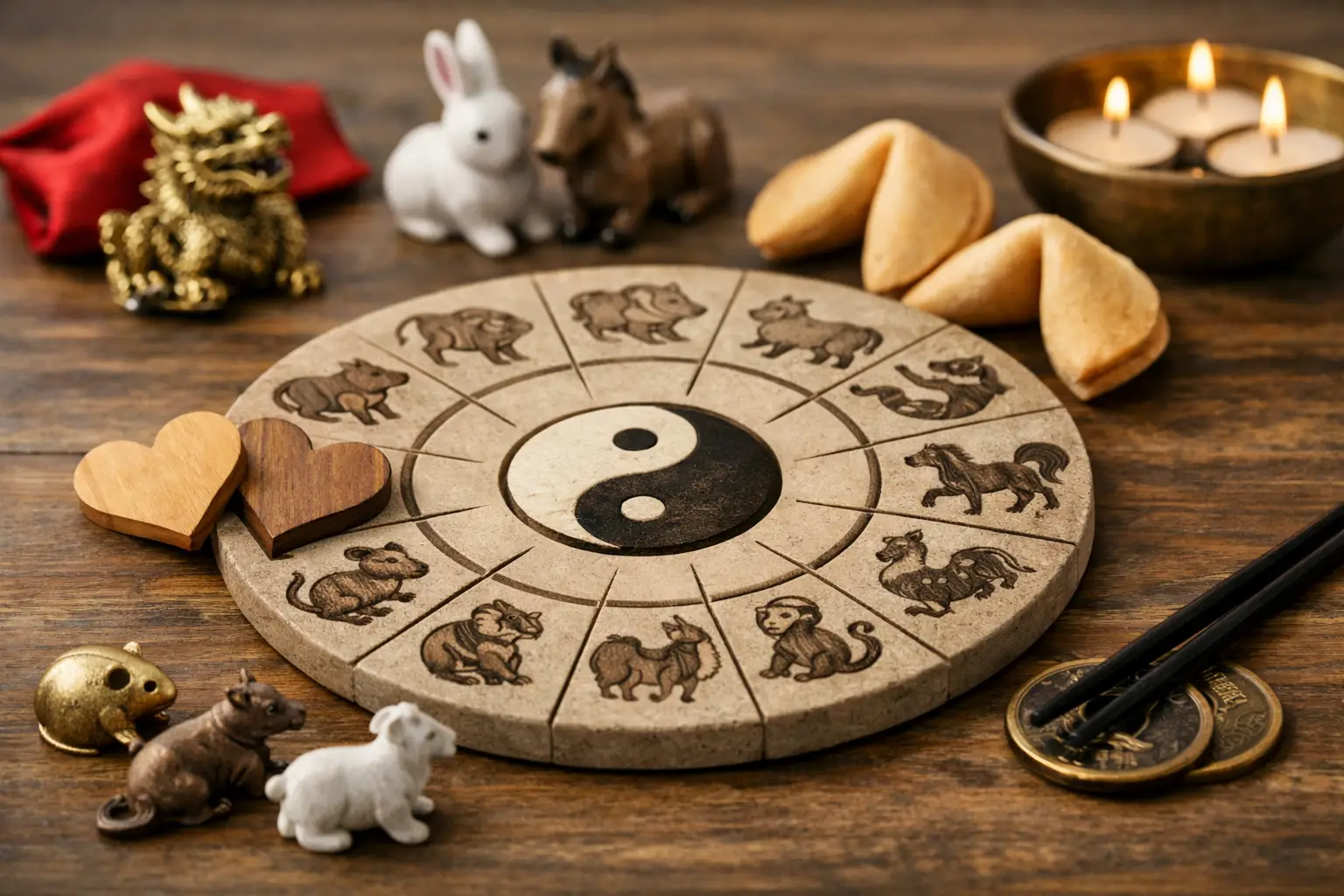
You do not usually look up a Chinese zodiac compatibility chart when everything feels easy. More often, it happens after a mixed signal, a magnetic connection, or a relationship that keeps circling the same lesson. That is where this system can be genuinely helpful – not as a fixed verdict, but as a way to understand the energy between two people with more compassion and clarity.
Chinese zodiac compatibility has been used for generations to read relationship patterns through birth years and the 12 animal signs. For many people, it offers a practical spiritual lens on attraction, communication, loyalty, emotional pace and long-term harmony. If you are trying to make sense of a romantic bond, a friendship, a family dynamic or even a work partnership, the chart can show where things flow naturally and where more awareness is needed.
What a Chinese zodiac compatibility chart actually shows
At its simplest, the chart compares one animal sign with another to identify harmony, tension or neutral ground. The 12 signs are Rat, Ox, Tiger, Rabbit, Dragon, Snake, Horse, Goat, Monkey, Rooster, Dog and Pig. Each carries its own temperament, instincts and style of relating.
A compatibility chart is not only about whether two signs are a perfect match. It is really about energy. Some pairs feel immediately familiar and supportive. Others are highly attractive but unpredictable. Some combinations challenge each person to grow, which can be rewarding or exhausting depending on timing, emotional maturity and the willingness to understand each other.
This is why charts can be useful, but also why they should not be taken too literally. A strong match does not guarantee lasting love. A difficult pairing does not mean failure. It means the relationship may need more conscious effort, better communication and clearer boundaries.
The zodiac signs and their natural relationship style
Each sign approaches connection in a slightly different way, and that shapes compatibility far more than a simple yes or no.
The Rat is clever, social and resourceful. It often connects well with signs that appreciate intelligence and adaptability. The Ox tends to be steady, loyal and grounded, preferring trust over drama. Tiger energy is passionate, bold and independent, while Rabbit is softer, diplomatic and emotionally aware.
Dragon often brings charisma, ambition and intensity. Snake is more private, intuitive and strategic. Horse values freedom and movement, whereas Goat seeks emotional warmth, beauty and gentleness. Monkey is witty and inventive, Rooster is direct and precise, Dog is honest and protective, and Pig is generous, affectionate and open-hearted.
When you look at a chart, these core qualities matter. Compatibility is not only about matching strengths. Sometimes it is about whether one person can understand what the other needs to feel safe, seen and respected.
Common matches in a Chinese zodiac compatibility chart
Certain sign pairings are traditionally seen as especially harmonious because their values and rhythms complement each other.
Rat often works well with Dragon and Monkey. These combinations can feel lively, mentally stimulating and future-focused. Ox tends to pair strongly with Snake and Rooster, forming bonds built on reliability, patience and shared commitment. Tiger and Horse may create an exciting, action-driven connection, while Rabbit and Goat often understand each other on an emotional level that feels naturally comforting.
Dragon and Monkey can be dynamic together, especially where ambition and confidence are involved. Snake and Ox may create a quieter but deeply steady bond. Dog and Rabbit are often considered a gentle, loyal match, and Pig can find warmth and ease with Rabbit or Goat.
These pairings are helpful starting points, but real life is rarely that neat. Two signs may be highly compatible on paper and still struggle if trust has been broken or emotional needs go unspoken. In the same way, a less traditional match can thrive when both people are self-aware and willing to meet in the middle.
Signs that tend to clash
Some combinations are known for friction because their instincts pull in different directions. Rat and Horse, for example, may find each other compelling at first but hard to settle with over time. Ox and Goat can struggle around pace and emotional style. Tiger and Monkey may spark a push-pull dynamic, and Rabbit and Rooster often differ in how they express criticism, order and sensitivity.
Dragon and Dog can challenge each other’s worldview, while Snake and Pig may have difficulty building trust if motives feel unclear. These pairings are not doomed. They simply tend to highlight contrasting habits, values or expectations.
That contrast can become either chemistry or conflict. It depends on how each person handles difference. If both are willing to listen rather than control, the relationship can become a powerful teacher.
Why birth year is only part of the picture
One of the biggest misunderstandings around compatibility charts is the idea that your birth-year animal sign tells the whole story. It does not. Chinese astrology is more layered than that.
Elements also play a role. Wood, Fire, Earth, Metal and Water modify how each sign expresses itself. A Fire Horse, for instance, may show much more intensity than an Earth Horse. A Water Rabbit may be more emotionally fluid than a Metal Rabbit. If two people share compatible signs but their elements create imbalance, the relationship may feel different from what the basic chart suggests.
There is also the simple truth that people grow. Someone may have the sign traits of a Tiger but present with more calm, discipline and patience after years of inner work. Another person may live out the shadow side of a softer sign if they are wounded, avoidant or fearful.
That is why a chart works best as a guide, not a sentence. It offers insight into tendencies, not certainty.
How to use the chart for love, friendship and family
In love, the chart can highlight emotional needs, attachment patterns and the likely rhythm of a relationship. You may notice why one person needs reassurance while the other needs space, or why one pushes for clarity while the other withdraws to think. That awareness can soften blame and create more compassionate conversations.
In friendships, compatibility often shows up through shared humour, trust and social energy. Some signs make excellent long-term friends because they balance each other well. Others are better in short bursts, where there is affection but not always emotional consistency.
Family relationships can be especially revealing through the chart. Parent-child dynamics, sibling tension and differing personalities often make more sense when seen through zodiac traits. A highly structured Ox parent may struggle to understand a freedom-loving Horse child, but that does not mean the bond lacks love. It may simply need a different style of communication.
At work, the chart can even shed light on leadership, teamwork and conflict. A Rooster may want precision, while a Goat prioritises harmony. A Dragon may move fast, while an Ox prefers careful planning. When you know the difference, collaboration becomes easier.
Reading compatibility with intuition, not fear
It is easy to use spiritual tools to look for certainty when you feel vulnerable. That is completely human. But the most helpful way to read a Chinese zodiac compatibility chart is with curiosity rather than fear.
If a pairing is considered challenging, ask what it is trying to teach. If a match is considered strong, ask what still needs care and honesty to keep it healthy. Spiritual insight is most useful when it helps you become more conscious, not more anxious.
This is especially important if you are using zodiac guidance after heartbreak, separation or confusion. A chart may validate what you have felt all along, but it should not replace your lived experience. If someone’s behaviour leaves you feeling unsafe, dismissed or constantly uncertain, that matters more than whether your signs are meant to align.
Likewise, if a relationship feels kind, grounded and emotionally nourishing, do not let a difficult chart pairing talk you out of something real. Compatibility is energy, but love is also choice.
When deeper guidance can help
Sometimes the chart opens the door, but it does not answer the whole question. You might know the signs and still feel stuck about where the relationship is heading, whether a reunion is likely, or why the connection feels so intense. That is often the moment when personalised spiritual insight becomes more valuable than a general chart.
A deeper reading can explore timing, emotional truth and the underlying lesson in the connection. For people seeking clarity around love and future direction, that kind of guidance can bring calm where overthinking has taken over. At Soul 2 Path, this broader spiritual context is part of what helps people move forward with more confidence, whether they are seeking reassurance, closure or a clearer sense of what comes next.
What the chart can reveal about your path
The real value of compatibility is not in being told yes or no. It is in seeing relationship patterns more clearly. You begin to understand why certain people feel easy, why others trigger growth, and why some connections arrive at exactly the right time to shift your path.
A Chinese zodiac compatibility chart can offer insight, but it works best when you meet it with honesty. Let it confirm what resonates, question what does not, and deepen your understanding of how you love, trust and connect.
Sometimes clarity does not come from finding the perfect match. It comes from recognising what your soul has been trying to show you all along.