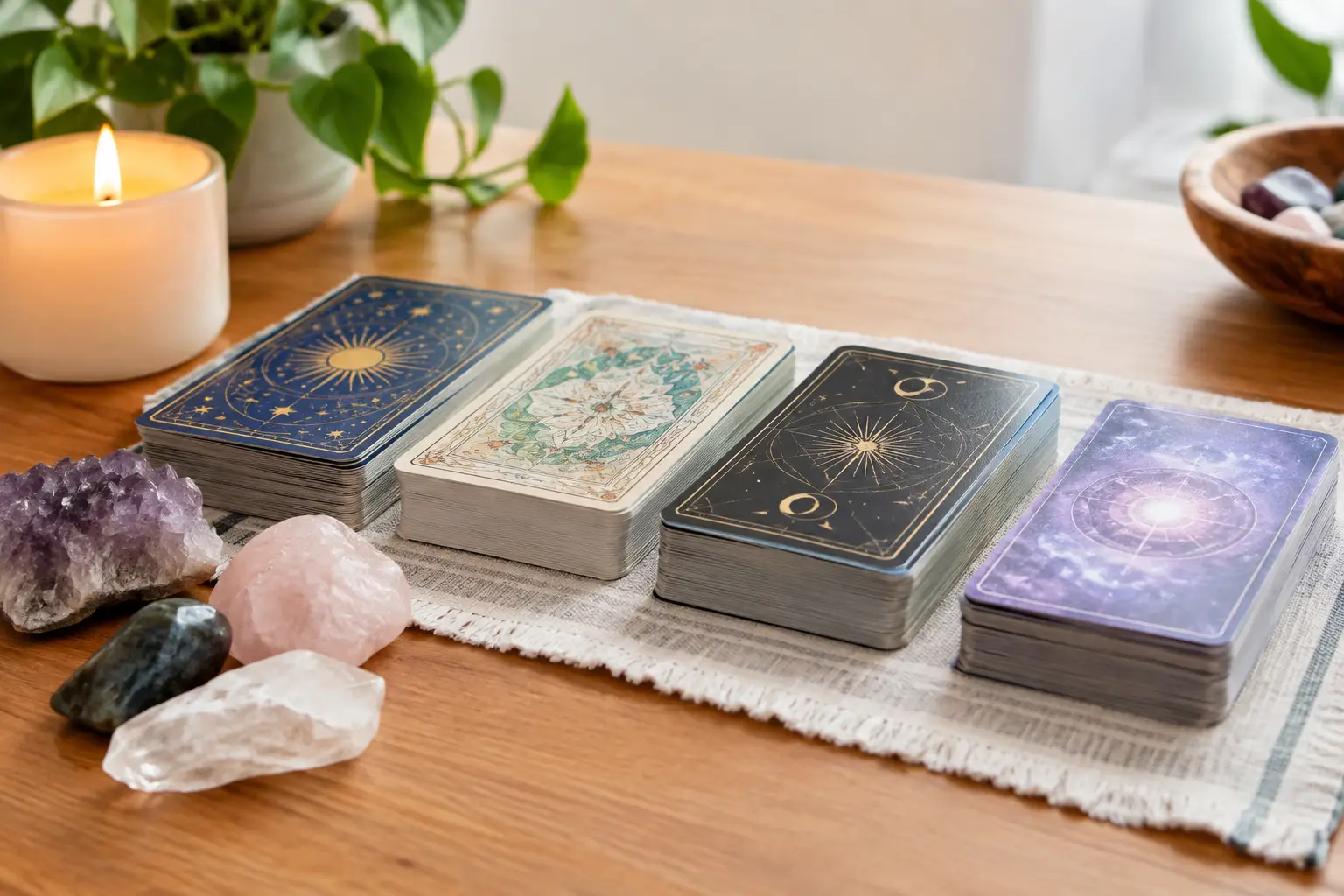
The right tarot deck can feel less like a purchase and more like a conversation waiting to begin. This guide to choosing tarot decks is here to help you find a set of cards that feels clear, comfortable and aligned with the questions you want to explore – whether you are opening your first deck or returning to tarot with fresh intention.
A beautiful deck is lovely to own, but artwork alone does not make a deck right for you. The images need to give you something to work with when a relationship feels uncertain, a career decision is sitting heavily on your mind, or you simply need a quiet moment to check in with yourself. Your tarot cards should invite honesty, not leave you second-guessing every symbol.
Start With the Way You Want to Read
Before comparing card designs, consider what you want tarot to bring into your life. Some people want a simple daily card pull for perspective. Others are looking for deeper spreads around love, family, purpose or a crossroads they cannot ignore. Your intention shapes the kind of deck that will support you best.
If you are new to tarot, a traditional structure is usually the easiest place to start. Most tarot decks contain 78 cards: 22 Major Arcana cards for larger life themes and 56 Minor Arcana cards that speak to everyday thoughts, feelings, changes and practical matters. A deck that follows familiar card names and symbolism makes it easier to learn from books, guides and trusted readers.
If you already read intuitively, you may prefer a more artistic or themed deck. These can be deeply personal, especially when the imagery reflects your heritage, spiritual beliefs, relationship with nature or preferred aesthetic. The trade-off is that highly stylised decks sometimes move far away from traditional symbolism, which can make them harder to interpret at first.
Guide to Choosing Tarot Decks by Tradition
The most common choice for beginners is a Rider-Waite-Smith style deck. Its scenes are detailed, expressive and full of visual cues. Rather than showing only a number of cups or swords, many of the Minor Arcana cards portray a moment or story. This gives your intuition more to respond to and makes it easier to understand a card before you have memorised every meaning.
Marseille-style decks have a more historic, patterned appearance, particularly in the numbered Minor Arcana. They can suit readers who enjoy numerology, colour symbolism and creating their own connections between the cards. They are rewarding, but often less immediately accessible for a complete beginner.
Thoth-inspired decks are rich in esoteric symbolism, astrology, Kabbalah and colour theory. For some readers, that depth is magnetic. For others, it can feel like too much information when they are simply trying to understand what the Three of Cups is asking them to notice. Choose this style if you genuinely enjoy studying layered spiritual systems, not because you feel you should begin with the most complex option.
There is no hierarchy here. A traditional deck can hold profound insight, and a modern deck can offer real emotional clarity. The best choice depends on whether its language makes sense to you.
Let the Artwork Speak Clearly
Tarot is visual. When you lay out cards during a reading, your eye will notice colour, body language, direction, weather, objects and repeated patterns before your logical mind has caught up. That is part of the value of the practice.
Look closely at a deck before committing. Ask yourself whether you can tell what is happening in the pictures. Do the faces and scenes stir a feeling? Can you imagine using the artwork to talk through a difficult situation with kindness and perspective? If every card feels distant, overly abstract or visually confusing, it may become a deck you admire on the shelf but rarely use.
Pay attention to emotional tone as well. Some decks are bright, gentle and affirming. Others are shadowy, dramatic or confronting. Neither is better, but a deck with very dark imagery may not be the best companion if you are seeking reassurance during a stressful period. Equally, a deck that feels overly sweet may not suit you if you value direct, clear-eyed guidance.
Representation matters too. Many modern decks include a wider range of ages, bodies, cultures, genders and life experiences. Seeing real human variety in the cards can make your readings feel more relevant and welcoming. Choose imagery that helps you feel seen rather than excluded.
Consider the Guidebook, Card Size and Card Feel
A useful guidebook can make a significant difference, particularly in your first few months with tarot. Some decks include only brief keywords. Others offer thoughtful explanations, spread ideas, reversed-card interpretations and prompts for reflection. If you want structure while you learn, look for a deck with a substantial guidebook written in a tone that feels supportive rather than rigid.
Card size is more practical than it sounds. Oversized cards can showcase beautiful art but may be awkward to shuffle. Tiny cards are portable but can make details difficult to see. Standard-sized cards are often the most comfortable for regular use, especially if you are still finding your preferred shuffle.
The finish matters as well. Glossy cards may slide easily, while matte cards can feel softer and reduce glare under lamplight. Very thick card stock tends to be durable, though it can be harder for smaller hands to shuffle. If possible, hold the deck or read reviews that discuss its physical quality. A deck you can comfortably handle is more likely to become part of your routine.
Tarot or Oracle Cards: Know the Difference
Tarot and oracle cards can both support reflection, but they work differently. Tarot follows a recognised 78-card framework, which creates a shared symbolic language across many decks. This structure is helpful when you want to build skill, compare interpretations or use established spreads.
Oracle decks are more flexible. They can contain any number of cards and may focus on themes such as angels, affirmations, moon cycles, animals or ancestral wisdom. Their messages are often more direct, which can feel comforting when you need a simple point of focus.
If you are drawn to tarot but feel nervous about getting it “right”, begin with a Rider-Waite-Smith style deck and use the guidebook without pressure. If you mostly want uplifting daily prompts, an oracle deck may be a better fit. Many people keep both: tarot for a fuller reading and oracle cards for a closing message.
Give Intuition a Place, Without Ignoring Practicality
You may hear that your first tarot deck must be gifted to you. While it is a lovely tradition for some, it is not a rule. You are allowed to choose and buy a deck that calls to you. Your relationship with tarot grows through attention, practice and honest reflection, not through waiting for permission.
At the same time, do not rely on a first impression alone. A striking cover can be compelling, but check the full card art, the guidebook style and how closely the deck follows tarot conventions. The deck that feels exciting today should also be one you can imagine reaching for on an ordinary Tuesday when you need grounded guidance.
Once you choose a deck, spend a little time making it yours. Look through every card, notice your first reactions and keep the deck somewhere safe and accessible. You might pull one card each morning and ask, “What energy would support me today?” Record what you notice before reading the guidebook. Over time, your own observations will become part of your tarot language.
A tarot deck does not need to predict every outcome to be meaningful. Its real value often lies in the pause it creates: a chance to name what you already sense, view a situation from another angle and make your next choice with greater confidence. If you would like personal support as you explore the messages arising in your cards, Soul 2 Path offers private guidance when you are ready to talk things through.
Choose the deck that makes you want to sit down, shuffle slowly and listen. The clearest card is often not the one with the most complicated meaning, but the one that helps you meet yourself with openness and move forward in a way that feels true to your path.