A decision can feel heavier when your mind has already argued both sides a dozen times. You may know the practical facts, yet still feel caught between what looks sensible and what feels true. Using a pendulum for decisions creates a quiet moment to step out of that mental loop, listen inwardly and notice what is asking for your attention.
A pendulum will not take responsibility for your choices, nor should it. Its value is in the pause it creates. When used with clear intentions and healthy boundaries, it can become a gentle spiritual tool for exploring your intuition, gaining perspective and moving forward with more confidence.
What a pendulum can reveal
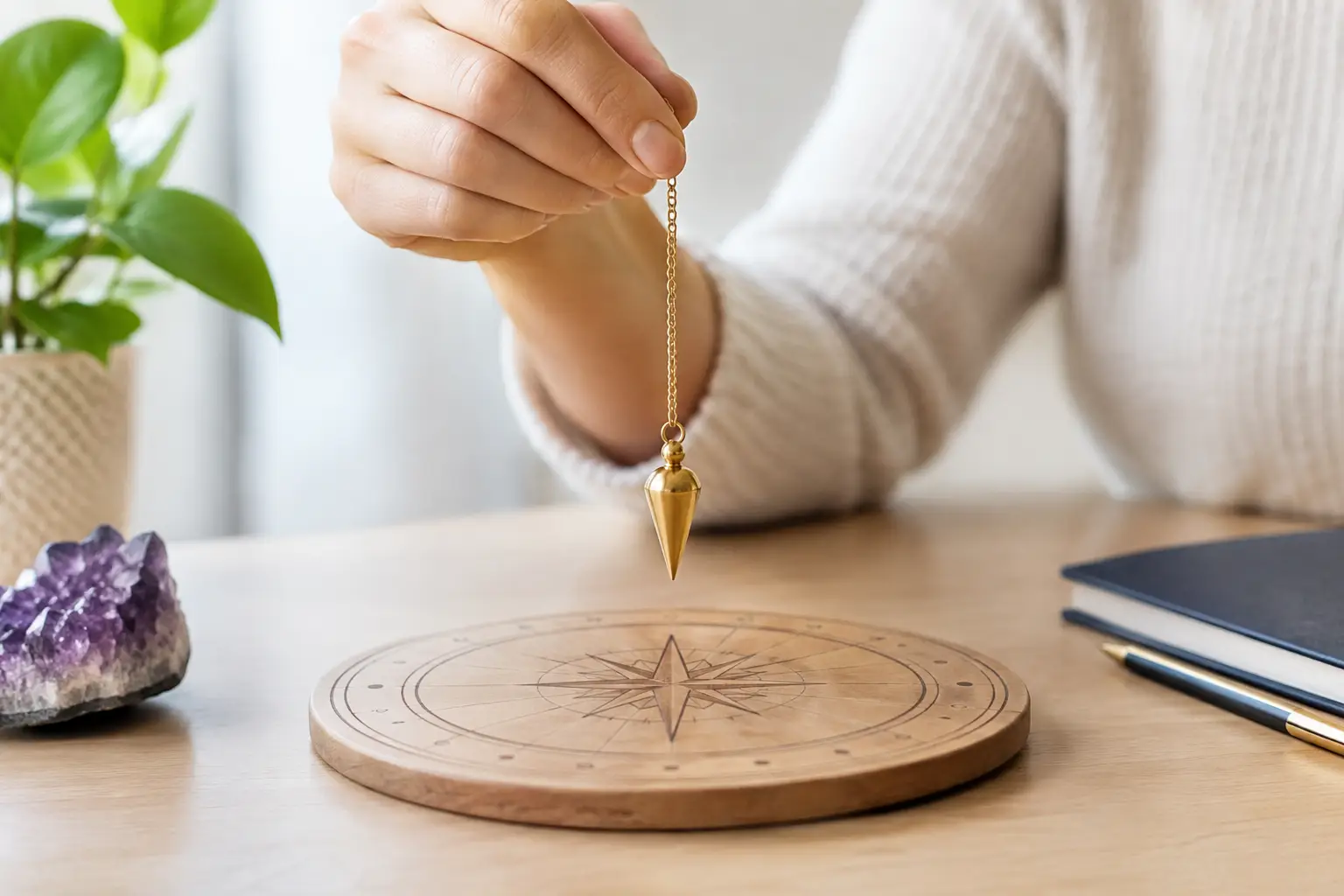
A pendulum is a small weighted object suspended from a chain or cord. It may be a crystal, a piece of metal, a charm or a treasured item that feels meaningful to you. Held steadily above a surface, it moves in response to subtle shifts in your hand and energy.
For some people, pendulum work is a form of spiritual communication. For others, it is a way to access feelings and inner knowing that are harder to hear when fear, urgency or other people’s opinions are loud. Both approaches can be meaningful. What matters most is approaching the practice with honesty rather than looking for a shortcut around a difficult choice.
Think of the pendulum as a conversation starter with your deeper self. If it points towards an answer that surprises you, pay attention to your reaction. Relief, resistance, excitement or dread can all offer useful clues. Often, that emotional response carries more insight than the swing itself.
Prepare before using a pendulum for decisions
Your state of mind shapes the experience. A pendulum session is unlikely to feel clear if you are rushing between tasks, checking your mobile or asking the same question while overwhelmed by anxiety. Create a small pocket of calm first.
Choose a quiet spot where you will not be interrupted. Sit with both feet on the floor, take several slow breaths and let your shoulders soften. You might light a candle, hold a crystal or simply place a hand over your heart. There is no need for an elaborate ritual. The purpose is to become present.
Before beginning, set an intention such as: “May I receive insight for my highest good, with clarity and compassion.” This helps you move away from seeking a particular answer and towards receiving guidance you can reflect on responsibly.
It also helps to be realistic about the decision in front of you. A pendulum can support reflection around whether you are ready to have a conversation, which option feels more aligned, or what needs further attention. It is not a substitute for urgent medical, legal, financial or safety advice. If a choice has serious consequences, use practical information and qualified professional support alongside any spiritual guidance.
Establish your yes, no and unclear signals
Hold the end of the chain between your thumb and forefinger, allowing the weight to hang freely. Rest your elbow on a table if that helps you stay relaxed and steady. Ask the pendulum to show you a “yes”. Watch its natural movement without trying to control it. It may swing forwards and backwards, side to side, or move in a circle.
Then ask for a “no” and observe the difference. Finally, ask for an “unclear” or “not now” signal. This third response is especially valuable. Not every question is ready for an answer, and uncertainty can be guidance in itself.
Practise with questions you already know, such as “Is my first name [your name]?” or “Am I sitting in my home?” This is not about proving the pendulum. It is about settling into the process and recognising your own patterns before asking something with emotional weight.
Ask questions that invite honest guidance
The quality of your question changes the quality of your reflection. Broad questions such as “What should I do with my life?” place too much pressure on one swing of a pendulum. Instead, break the issue into smaller, present-focused questions.
If you are considering a career change, you might ask, “Would exploring this role further support my growth right now?” If relationship worries are on your mind, try, “Am I ready to express my needs calmly and openly?” These questions centre your agency. They do not hand your future over to an object.
Avoid questions that come from panic or demand certainty about another person’s private thoughts. Asking whether someone will call, leave their partner or make a specific choice can keep you emotionally tied to something outside your control. A more empowering question could be, “Would focusing on my own boundaries bring me peace in this connection?”
Keep each question simple, specific and free from double negatives. Ask one at a time, then give yourself a moment to notice the response. Repeating the same question over and over because you dislike the answer usually creates more confusion, not more clarity.
Read the answer with your whole self
When the pendulum begins to move, resist the urge to treat it as a final verdict. Take note of the answer, then check in with yourself. Does it reflect something you have quietly known? Does it highlight a fear you need to work through? Does it suggest you need more information before making a commitment?
A “yes” may mean the option is worth exploring, not that every detail will be easy. A “no” may signal poor timing rather than a permanent closed door. And an unclear response may be an invitation to pause, rest or gather facts before you decide.
Writing down your question, response and feelings afterwards can be surprisingly helpful. Over time, a journal shows whether your pendulum practice helps you make grounded choices or whether you are using it when you need a more direct conversation, plan or professional opinion. Spiritual practice becomes more trustworthy when it is paired with self-awareness.
When emotions are too close to the question
There are times when you may be too invested to read clearly. Heartbreak, grief, financial pressure and major life transitions can make any answer feel charged. That does not mean you have failed at pendulum work. It means you are human and deserve gentleness.
Put the pendulum aside for a day or two if your hand feels tense, the answers keep changing or you feel compelled to ask again immediately. Go for a walk, speak with someone you trust, sleep on it or return to the practical details. Clarity often arrives once the nervous system has had room to settle.
A reading with an experienced psychic can also offer a supportive perspective when you want to explore the bigger pattern behind a decision. Soul 2 Path provides private guidance by phone, SMS and email, so you can choose a format that feels comfortable while receiving insight at a time that suits you.
Let the pendulum support, not lead
The most meaningful use of a pendulum is not about predicting every turn ahead. It is about strengthening your relationship with your own discernment. Use it to notice where you feel aligned, where you are avoiding the truth and where patience may serve you better than a rushed answer.
After a session, choose one small action that honours what you have learned. That may be researching an option, setting a boundary, making a call or simply giving yourself permission to wait. A pendulum can point towards a possibility, but your courage, values and lived wisdom are what turn clarity into a path forward.